Meteor Showers 2026: When to Watch the Leonids and Geminids
The 2026 peaks of the Leonid and Geminid meteor showers in Turkish time, with moonset times and how many meteors you will really see under a dark sky. Plus what to wear on a cold night in Bolu, camera settings and a plan for the night.
According to the International Meteor Organization's (IMO) 2026 calendar, the Leonid meteor shower peaks at 02:45 Turkish time on 18 November (ZHR about 15) and the Geminid meteor shower at 17:00 on 14 December (ZHR about 150); the best nights to watch are the night of 17–18 November and the night of 13–14 December. The Moon is not a problem at either peak: in Mengen it sets at 00:33 on 18 November and at 21:20 on 13 December (USNO). Under a dark rural sky, a realistic expectation is 5–10 meteors an hour for the Leonids and 50–90 an hour for the Geminids; under city lights those numbers drop several-fold. The Quadrantids follow at 06:25 on 4 January 2027, before dawn and with almost no moonlight.
When are the 2026 meteor showers?
The two remaining major meteor showers of 2026 are the Leonids, which peak on the night of 17–18 November, and the Geminids, which peak on the night of 13–14 December; at both, the Moon has set by the most productive hours. According to the International Meteor Organization's (IMO) 2026 calendar, the Leonids reach maximum activity at 02:45 Turkish time on 18 November and the Geminids at 17:00 on 14 December. The first major shower of the new year, the Quadrantids, peaks at 06:25 on 4 January 2027.
A meteor shower happens when the Earth passes through the dust and small rocky particles that a comet or asteroid has left along its orbit. These particles hit the atmosphere at tens of kilometres per second and burn up; the brief streak of light we see is the result. A shower's meteors seem to come from a single point in the sky, the radiant (called "saçılma noktası" in Turkish). Each shower takes its name from the constellation where that point lies: the Leonids from Leo, the Geminids from Gemini (İkizler in Turkish).
Meteor shower calendar, November 2026 to January 2027
| Shower | Active | Peak night (Turkish time) | Hourly rate | Moon (Mengen) | Best hours |
|---|---|---|---|---|---|
| Leonids (Leo) | 6–30 November | 17–18 November; peak 02:45 on 18 November | ZHR about 15; 5–10 an hour under a dark sky | First quarter, 54% lit at the peak; sets at 00:33 | 01:00–06:00 on 18 November |
| Geminids (Gemini) | 4–20 December | 13–14 December; peak 17:00 on 14 December, broad | ZHR about 150; 50–90 an hour under a dark sky | Crescent, 16–25%; sets at 21:20 on 13 December | 21:30 on 13 December to 06:30 on 14 December; best 00:00–05:00 |
| Quadrantids (Boötes area) | 28 December–12 January | 3–4 January 2027; peak 06:25 on 4 January | ZHR about 80 (variable, 60–200); average 25 under a dark sky | Thin crescent, 12%; rises at 05:36 | 03:00–06:30 on 4 January |
Dates and ZHR: IMO 2026 and 2027 calendars. Moon phases and rise and set times: US Naval Observatory (USNO), for Mengen's coordinates (40.94° N, 32.07° E). Moon illumination at the peak moment: NASA JPL Horizons. Realistic hourly counts for the Leonids and Geminids are our own estimate; the Quadrantid figure is the AMS average.
What is ZHR, and how many meteors will you really see?
The ZHR is not the number you will see but a theoretical maximum for ideal conditions; even in the countryside you will usually see half of it or fewer. As the IMO defines it, the ZHR (zenithal hourly rate) is the number of meteors a single observer would see in one hour under a perfectly clear sky, dark enough to see stars of magnitude 6.5 with the naked eye, with the radiant directly overhead. Three things reduce the real number:
- The radiant's altitude. When the radiant is near the horizon, some meteors stay below it. With the radiant 30° up you can see about half of the ZHR; at 65°, about nine-tenths.
- How dark the sky is. Most meteors are faint; as light pollution increases, they are the first to disappear.
- How much open sky you have. Trees, buildings and cloud block part of the sky.
Working backwards from the IMO's definition of the ZHR, we made a rough estimate for the radiant's altitude and the darkness of the sky:
| Sky | Faintest star visible to the naked eye | Leonids (radiant at 45°, around 04:00) | Geminids (radiant at 65°, around 01:00) |
|---|---|---|---|
| Moonless rural sky, no artificial light | Magnitude 6 | about 7 an hour | about 85 an hour |
| Edge of a small town | Magnitude 5 | about 3 an hour | about 30 an hour |
| City centre | Magnitude 4 | about 1 an hour | about 12 an hour |
So on Geminid night, someone watching from inside a big city might see a dozen meteors an hour, while someone away from city lights could see several times that in the same hour. For the Leonids the difference is even more decisive: almost none in the city, one every few minutes somewhere dark.
Leonid meteor shower 2026: the night of 17–18 November
The best time for the Leonids is the early hours of Wednesday 18 November, between 01:00 and 06:00. The IMO gives the shower's regular peak as 23:45 UT on 17 November, which is 02:45 on 18 November in Turkey, and expects a ZHR of around 15. Leonids enter the atmosphere at about 71 km per second, among the fastest meteors known, and leave short, sharp streaks.
The Moon: why do sources give different figures? The Moon reaches first quarter at 14:48 Turkish time on 17 November (USNO). You will see figures from 39% to over 50% in different calendars because they are given for different days and times: the American Meteor Society (AMS) takes 16–17 November as the peak night and gives the Moon's value for that day, 39%. We used the IMO's peak moment: according to NASA JPL Horizons, the Moon is 54% lit at 02:45 on 18 November, but in Mengen it has already set, at 00:33. In other words, the half Moon brightens the evening sky, but it is gone by the hours that matter.
When does the radiant rise? In Mengen, the constellation Leo rises above the east-north-east horizon around midnight; it climbs to about 33° by 03:00 and 55° by 05:00. Astronomical twilight begins to brighten the sky at 06:07. Counts increase as the radiant climbs, so the hours towards dawn are the most productive.
Other nights. The night of 16–17 November offers almost the same conditions; the Moon sets at 23:29. For the night of 18–19 November, the IMO lists a close approach to a dust trail released by the comet in 1800 (around 00:55 Turkish time on 19 November), but Jérémie Vaubaillon, who made the calculation, does not expect a significant increase. The Moon sets at 01:37 that night. In short, no "meteor storm" is expected in 2026.
It falls in the school break. The Leonid peak falls inside the 16–20 November mid-term break set by Türkiye's Ministry of National Education (MEB): the night of 17–18 November runs from Tuesday into Wednesday, and there is no school the next morning. If you are watching with children, going to bed early and getting up around 01:00 is easier than waiting up until midnight. For the rest of the break week, see our November 2026 school break plan for Bolu.
Geminid meteor shower 2026: the night of 13–14 December
The best night for the Geminids is Sunday 13 into Monday 14 December: from moonset at 21:20 until 06:30, especially between 00:00 and 05:00. The IMO's 2026 calendar describes the shower like this:
"The best and most reliable of the major annual showers presently observable reaches its broad moon-free maximum on December 14 centred at 14h UT. The shower is known for bright meteors and fireballs."
14:00 UT is 17:00 in Turkey, when the sun has only just set in Mengen (17:24). But the Geminid peak is broad. According to the IMO, the ZHR stays above 100 for 10–12 hours, and the reliably measured peaks of the past two decades all fell between 00:00 and 21:00 Turkish time on 14 December. That window covers the second half of the night of 13–14 December, when the radiant is highest.
Moon and radiant. Four days after the new moon of 9 December, the Moon is a thin crescent: 16% lit on 13 December and setting at 21:20 in Mengen. The radiant, near Castor, the bright star of Gemini, rises in the north-east around sunset; it is 23° up by 21:00, 44° by 23:00, and almost overhead at 82° around 03:00. The AMS describes the Geminids as the one major shower that provides good activity before midnight. These meteors are relatively slow, at about 35 km per second, and often bright; their source is not a comet but an asteroid, 3200 Phaethon.
A second chance: the evening of 14 December. That evening the Moon is 25% lit and sets at 22:22. The IMO notes that the share of bright Geminids increases towards the end of the main peak, which in Turkey falls on the evening of 14 December. If you are coming for the weekend, the night of Saturday 12–13 December is also worth trying (the Moon sets at 20:17), though counts will be lower than on the peak night.
Quadrantids, 3–4 January 2027: a short but moonless peak
The sky column in the January 2026 issue of Bilim ve Teknik, the popular-science magazine of TÜBİTAK (the Scientific and Technological Research Council of Türkiye), summed up this shower's importance:
"Quadrantid Gök Taşı Yağmuru, ağustos ayında en yüksek etkinliğe ulaşan Perseid ve aralık ayında en yüksek etkinliğe ulaşan Geminid gök taşı yağmurları ile birlikte yılın en önemli üç gök taşı yağmurundan biridir."
("The Quadrantid meteor shower, together with the Perseids, which peak in August, and the Geminids, which peak in December, is one of the three most important meteor showers of the year.")
— Dr. Tuba Sarıgül, TÜBİTAK Bilim ve Teknik, January 2026, issue 698
In January 2026 a full moon washed out this peak; in 2027 the situation is reversed. According to the IMO's 2027 calendar, the peak is at 03:25 UT on 4 January 2027, which is 06:25 in Turkey; the ZHR is around 80 but can vary from 60 to 200 from year to year. The IMO writes that "conditions are perfect concerning the moonlight": the thin crescent before the new moon of 7 January (12% lit) does not rise in Mengen until 05:36. The AMS also notes that the peak time favours Europe and western Asia.
The radiant lies between the constellations Draco and Boötes, near the Big Dipper. In the evening it sits just above the northern horizon, then climbs in the north-east towards dawn: 27° up at 03:00, 45° at 05:00. Because the peak lasts only a few hours, the best window is 03:00–06:30 on Monday 4 January; the AMS expects an average of 25 meteors an hour under a dark sky. January is Bolu's coldest month; if you are spending New Year in the region and staying a few days, see our New Year bungalow break plan for Bolu.
How do you watch a meteor shower?
You do not need a telescope or binoculars to watch meteors; a dark, clear sky, 20–30 minutes for your eyes to adjust and somewhere to lie back are enough.
- Use your eyes. Meteors appear anywhere in the sky and last a second or two. Telescopes and binoculars narrow your field of view.
- Give your eyes 20–30 minutes. A brief flash of white light resets your dark adaptation. If you must look at your phone, turn the brightness right down and switch on a red filter; use a red-light head torch instead of a white torch.
- Lie down. A reclining chair, a camping mat or a thick blanket. You cannot watch for an hour with your head tipped back.
- Where to look. Not straight at the radiant but 40–60° away from it, at the widest, darkest part of the sky. If you trace a meteor's path backwards and it leads to the radiant, it belongs to that shower.
- Be patient. Meteors do not arrive at regular intervals; you may see nothing for five minutes and then several in a row. Allow at least 45–60 minutes.
- Check the cloud. The day before, look at the Mengen forecast from MGM, the Turkish State Meteorological Service. Under a cloudy sky, the peak time means nothing.
How cold is a November or December night in Bolu, and what should you wear?
Meteor hours are the coldest hours of the day: in Bolu the average low is 2.1 °C in November, -1.1 °C in December and -3.5 °C in January, and these lows are usually reached towards dawn. Data from MGM's Bolu (city centre) station, 1929–2025:
| Month | Average high | Average low | Days with precipitation | Daily sunshine |
|---|---|---|---|---|
| November | 13.3 °C | 2.1 °C | 11.8 | 3.3 hours |
| December | 7.6 °C | -1.1 °C | 14.7 | 2.0 hours |
| January | 5.4 °C | -3.5 °C | 15.5 | 2.0 hours |
Two practical points follow from the table. First, cloudy nights are common in these months, so plan for two nights rather than staking everything on the peak night. Second, lying still on the ground feels much colder than walking around; MGM has recorded -24.8 °C even in November. In the forest, mornings are usually cooler and damper than in Bolu city centre; details in our Mengen and Yedigöller weather guide.
Clothing list for an observing night:
- Thermal base layer, fleece mid-layer and a puffer or down jacket
- Hat, neck warmer and two layers of gloves (thin liners under thick gloves)
- Wool socks and thick-soled boots
- A mat to lie on, with a sleeping bag or blanket on top (most of the cold comes from the ground)
- A hot drink in a flask, hand warmers and a red-light torch
How do you photograph meteors?
A tripod, a wide-angle lens and hours of continuous shooting are the three essentials of meteor photography. The values below are starting points; adjust them after the first few frames according to how bright the sky is.
| Setting | Starting value |
|---|---|
| Lens | 14–24 mm wide angle (on a full-frame camera) |
| Aperture | f/2.8 or the lens's widest setting |
| ISO | 1600–3200 |
| Exposure | 15–25 seconds (longer turns stars into trails) |
| Focus | Manual; magnify a bright star in live view, focus, then tape the ring |
| File format | RAW |
| Shooting | Continuous sequence with an intervalometer |
- Point the camera 30–45° away from the radiant, at the darkest part of the sky; leaving a silhouette of trees at the bottom of the frame gives a sense of scale.
- Turn off long-exposure noise reduction; with it on, the camera pauses after each frame and you miss any meteor that crosses during the pause.
- Batteries drain quickly in the cold; keep spares in an inside pocket.
- In damp forest air the lens fogs up; a lens heater band, or a hand warmer held on with an elastic band, solves it.
- A phone on a tripod in night mode can catch the brightest meteors; start out knowing you will miss most of them.
Why somewhere away from city lights?
Because most meteors are faint, and light pollution wipes them out first; by the estimate above, in the same Geminid hour you would expect about 12 meteors an hour in a city and about 85 under a dark rural sky. Nesilce Tatil Köyü is in a rural, forested location in Mengen, about 55 km (50 minutes) from Bolu city centre. We do not offer an official measurement of sky darkness (an SQM reading or a Bortle class); but in a village setting with few light sources, the sky on moonless nights is noticeably darker than in a city.
In the forest, keep two rules in mind:
- Trees block the horizon. Find the open spot with the widest view of the sky during daylight. The Leonid radiant rises in the east, the Quadrantid radiant in the north-east; the Geminid radiant is almost overhead after midnight.
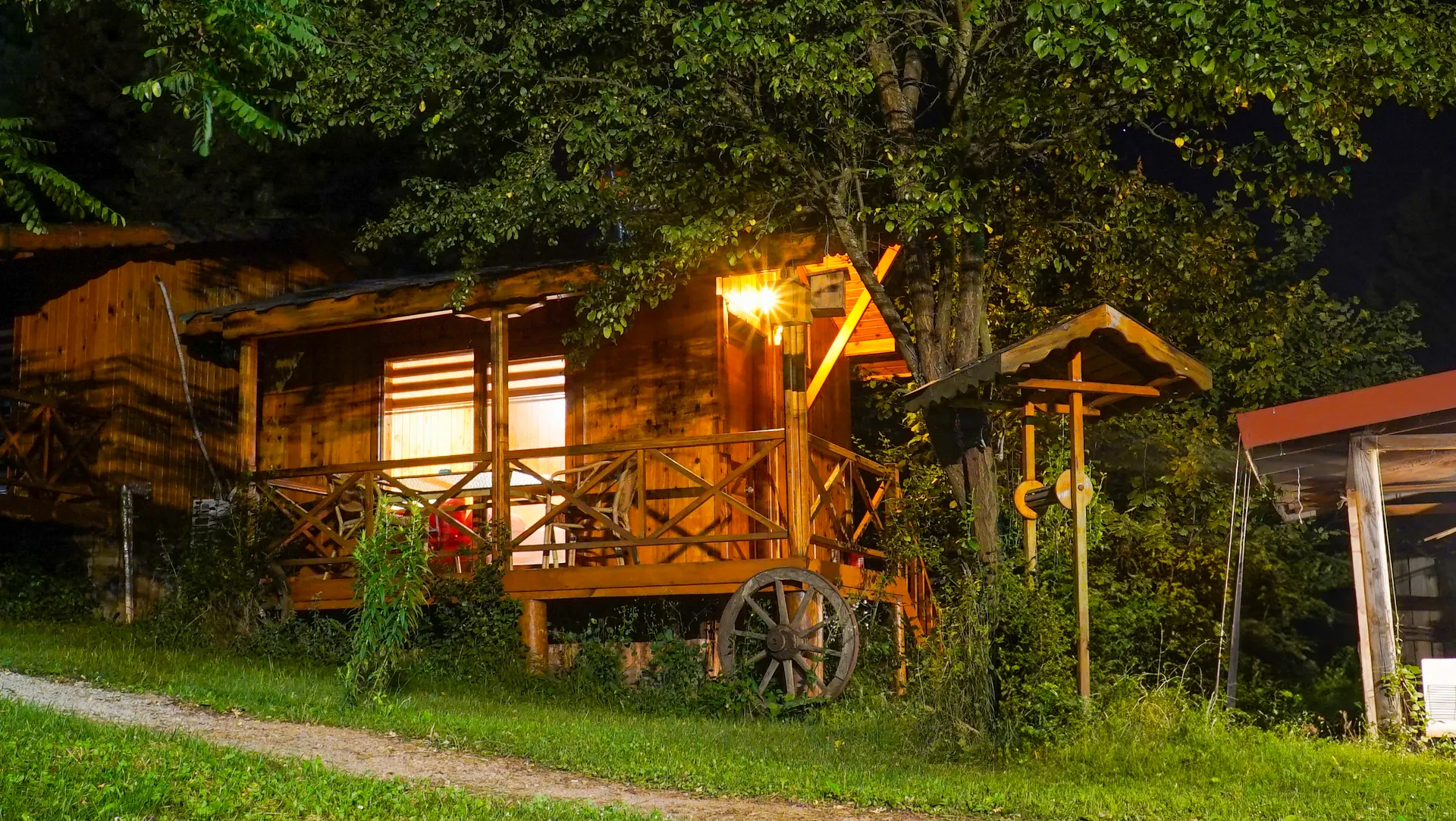
- Switch off the lights. Turn off bungalow and terrace lights, and keep away from car headlights and lit areas. Watching near the unit you are staying in also makes it easy to go inside for a break and a hot drink.
How do you plan an observing night in Bolu?
Arrive before dark, watch from where you are staying, and do not drive icy forest roads at night in search of a dark spot.
- Arrival time. In Mengen the sun sets at 17:32 on 17 November and at 17:24 on 13 December (USNO). Check-in is from 14:00; for the drive of about 3 hours from Istanbul or about 2.5 hours from Ankara, set off before midday.
- Roads and snow. In 2026 the season's first snow fell on the higher stretches of the Yedigöller road on 16 October, and from mid-November roads switch to winter conditions. Before setting off, read our guides to whether the Yedigöller road is open in November and the Mengen route in winter.
- Yedigöller is not a night-time viewing spot. Overnight stays in the national park are only possible at designated campsites; for the campsites' status and the current rules, see our Yedigöller visitor rules and call the Bolu Branch Directorate of National Parks (0374 215 52 81). Do not plan to enter the park at night without that confirmation; visiting the park by day and giving the night to the sky where you are staying is the safest arrangement.
- Sleep. For the Leonids, go to bed early, set an alarm for 00:45 and watch from 01:00. On the Geminid night, start at 21:30 after moonset and add a few hours after midnight. Check-out is at 12:00, so there is time to sleep in after a night of watching; arrange your breakfast time in advance.
- Plan two nights. A stay of 16–18 November (Monday to Wednesday) for the Leonids, or 12–14 December (Saturday to Monday) for the Geminids, gives you a back-up night as well as the peak night.
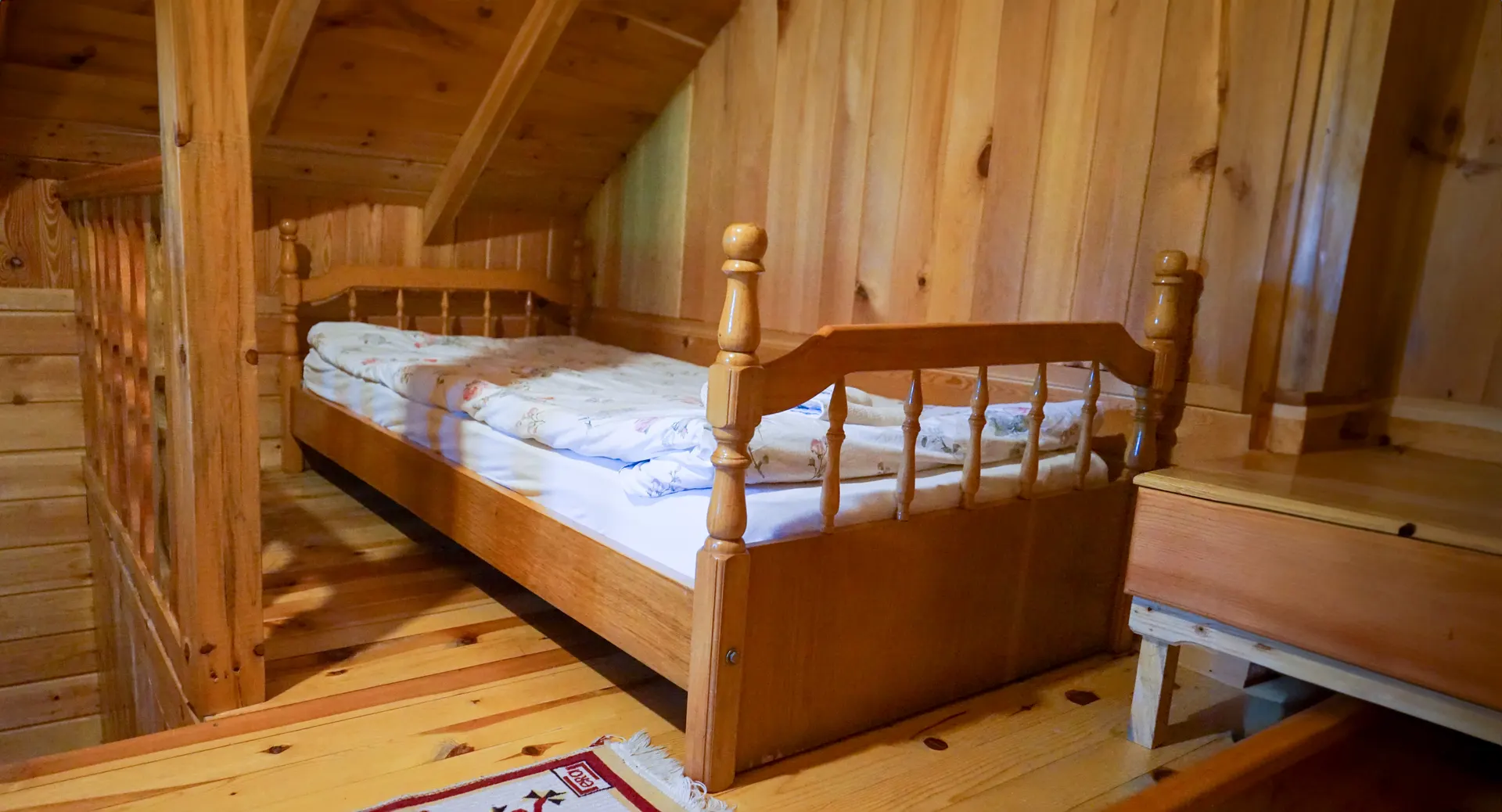
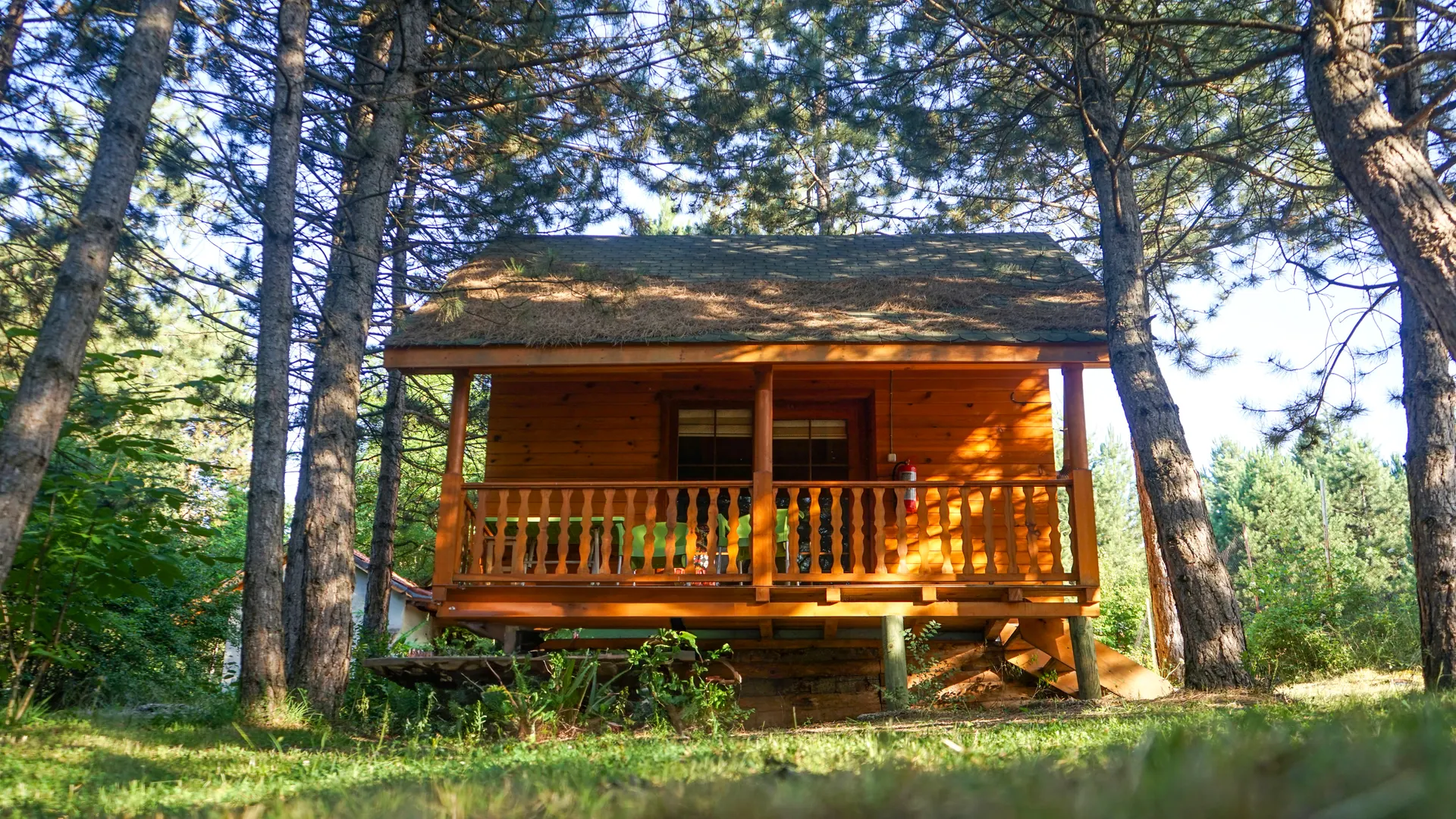
Nesilce has 25 units: 8 two-storey bungalows (4–6 guests, with a large terrace), 10 standard bungalows (2–3 guests) and 7 hotel rooms (2 guests); Turkish village breakfast is included. For what a night in a bungalow is like, see our Yedigöller bungalow accommodation guide.
How we prepared this guide
We took the activity periods, peak times and ZHR values from the IMO's 2026 and 2027 calendars and compared them with the AMS calendar. Moon phases and rise and set times for Mengen (40.94° N, 32.07° E) come from the USNO, and the Moon's illumination at each peak moment from NASA JPL Horizons; we calculated the radiant altitudes and astronomical twilight for the same coordinates ourselves. The realistic hourly counts are not measurements but a rough estimate derived from the IMO's definition of the ZHR: hourly count ≈ ZHR × sin(radiant altitude) ÷ r^(6.5 − limiting magnitude), where r is the population index the IMO gives for each shower. Temperatures are from MGM's Bolu station. We have not measured light pollution at the resort, and the weather on the peak nights cannot be known yet.
Sources
- IMO, 2026 Meteor Shower Calendar (Jürgen Rendtel, ed.)
- IMO, 2027 Meteor Shower Calendar (Jürgen Rendtel, ed.)
- American Meteor Society, Meteor Shower Calendar
- USNO, Phases of the Moon
- USNO, Sun and Moon Rise/Set for One Day
- NASA JPL, Horizons System
- TÜBİTAK Bilim ve Teknik, January 2026, issue 698 (sky column)
- MGM, official climate statistics: Bolu
- MGM, Mengen weather forecast
- MEB, 2026-2027 school year calendar (13 June 2026)
For availability on the Leonid and Geminid nights and help planning your observing night, call us or message us on WhatsApp on +90 505 790 50 17.
Frequently asked questions
When is the meteor shower in 2026?
The remaining major meteor showers of 2026 are the Leonids and the Geminids. According to the IMO, the Leonids peak at 02:45 Turkish time on 18 November and the Geminids at 17:00 on 14 December; the best nights to watch are the night of 17–18 November and the night of 13–14 December. The first major shower of the new year, the Quadrantids, peaks at 06:25 on 4 January 2027.
What time do the Geminids peak?
The IMO gives the peak as 14:00 UT on 14 December, which is 17:00 in Turkey. Because that falls at dusk, the best window is the night before: from 21:30 on 13 December (the Moon sets at 21:20) until 06:30 on 14 December, especially 00:00–05:00, when the radiant is highest. The Geminid peak is broad; the ZHR stays above 100 for 10–12 hours.
What time should I watch the Leonids?
Between 01:00 and 06:00 on the morning of Wednesday 18 November. The Leonid radiant in the constellation Leo rises in Mengen around midnight, the Moon sets at 00:33 and the IMO's peak time is 02:45. Dawn begins just after 06:00. The night of 16–17 November offers similar conditions; that night the Moon sets at 23:29.
Can you see the meteor showers from Turkey?
Yes. The radiants of the Leonids, Geminids and Quadrantids are all in the northern sky and are well placed from Turkey's latitude. The American Meteor Society (AMS) notes that the timing of the 2027 Quadrantid peak favours Europe and western Asia. All you need is a clear sky and a dark place away from city lights.
Do I need a telescope to watch a meteor shower?
No. Meteors appear anywhere in the sky and last a second or two; a telescope or binoculars narrow your field of view and lower your chances of catching one. Your eyes, 20–30 minutes to adapt to the dark and somewhere to lie back are all you need.
How many meteors per hour will I see?
The ZHR is a theoretical maximum for ideal conditions; in practice you see fewer. By our estimate, under a moonless rural sky you can expect 5–10 meteors an hour from the Leonids and 50–90 an hour on the Geminid peak night. From inside a city, the Geminid figure drops to around 10–15 an hour. The AMS gives an average of 25 an hour for the Quadrantids under dark skies.
Will the Moon affect the meteor showers in 2026?
Not during the peak hours. At the Leonid peak the Moon is 54% lit but has already set in Mengen at 00:33. On the Geminid night, a 16–25% crescent sets at 21:20. At the Quadrantid peak the Moon is a thin 12% crescent that does not rise until 05:36.
Where can I watch a meteor shower in Bolu?
From an open spot away from city lights with a wide view of the sky. The most practical option is to watch near where you are staying in a rural area; driving icy forest roads at night in search of a dark spot is not recommended. Before planning a night-time visit to Yedigöller National Park, check the rules and the status of the campsites with the Bolu Branch Directorate of National Parks (0374 215 52 81).
Plan your Yedigöller break now
Call us for availability, room types and route suggestions around Yedigöller.
Book online:AirbnbHotels.com