
Yedigöller Photography Route: Light, Spots and Where to Stay
First light at Büyükgöl, the waterfall at Nazlıgöl, the panorama from Kapankaya. A spot-by-spot route for photographing Yedigöller, with sunrise times, 2026 filming permits and an overnight stay plan.
The most productive photography day at Yedigöller starts with a night in the area and arriving at the park before sunrise: reflections at Büyükgöl and Deringöl in the morning, the forest interior and the Nazlıgöl waterfall at midday, and the panorama from Kapankaya in the afternoon. Amateur photography is free; drone, commercial and social media content shoots need a permit and a fee under DKMP's 2026 tariff.
What is the best plan for photographing Yedigöller?
The most productive version of a Yedigöller photography route is this: stay a night in the area, reach the park before sunrise, shoot the lake reflections in the first light, the forest interior and details at midday, and the panorama from the Kapankaya viewing terrace in the afternoon. Personal photography and video are free. Drone filming, commercial shoots and social media content shoots, however, need a permit and a fee under the 2026 tariff of Türkiye's General Directorate of Nature Conservation and National Parks (DKMP).
This guide brings together what to shoot where, sunrise times by season, a kit list, the drone rules and a dawn-to-dusk shooting plan with an overnight stay.
Key park facts for photographers
| Topic | Details |
|---|---|
| Location | About 42 km north of Bolu |
| Area and status | 1,623 hectares; declared a national park on 29 April 1965 |
| Lakes | Seven small lakes dammed by landslides, strung north to south along a line of about 1,500 m |
| Altitude | The main plateau averages 780 m; the highest point is Eğrikiriş Tepesi (1,488 m) |
| Forest | Beech is dominant; also oak, hornbeam, alder, black pine, Scots pine, fir, linden, yew |
| Wildlife | Red deer, roe deer, bear, wild boar, wolf, fox, squirrel |
| Winter access | The Bolu road is closed by snow; the Yeniçağa-Mengen-Yazıcık or Devrek-Yazıcık route is used |
| 2026 entry fee | 75 TL on foot, 225 TL per car (occupants included) |
| Information line | National Parks Bolu Branch Office: 0374 215 52 81 |
The information comes from the Culture Portal, the DKMP 9th Regional Directorate and the DKMP 2026 fee tariff. We could not find officially published opening hours. In December 2025, the DKMP 9th Regional Director announced that from 2026 visitors would enter by appointment, applying online a few days in advance (İHA, Kocaeli Gündem); we could not confirm how the system works from an official source. Before a dawn shoot, call the number above to ask what time the gate opens and whether you need an appointment.
Which lake, which shot?
| Spot | What to shoot | Light and timing | Kit |
|---|---|---|---|
| Büyükgöl | The largest lake (15 m at its deepest); reflections of the shoreline forest, mist on the water | The first hour after sunrise, in a windless moment | Wide angle, tripod |
| Deringöl | Colour reflected on a still surface | Morning, before shadows fall | Polarising filter |
| Nazlıgöl ("Waterfall Lake") | The waterfall formed by water emerging on the lake's north-east side | Overcast weather or hours when it is in shade | ND filter, tripod |
| Seringöl, Küçükgöl, İncegöl, Sazlıgöl | Smaller, quieter lakes; compositions framed by forest | Soft afternoon light | Short telephoto |
| Kapankaya viewing terrace | A panorama looking down on the lakes and forest | Afternoon, as the mist clears | Wide angle + telephoto (forest layers) |
| Karaçam Monumental Tree | A single-tree portrait; reached by a footpath from the roadside sign | Overcast weather | Wide angle |
| Deer breeding area | Deer portraits in an area open to visitors | Morning and late afternoon | 200 mm or longer telephoto |
| Trout breeding station | Founded in 1969 as Türkiye's first farmed trout station; documentary shots | Any time | Standard lens |
There is a small difference in the lake names: the Culture Portal writes "Küçükgöl" while the DKMP page writes "Kurugöl". You can search for either name on the map.
A practical note: most visitors gather around Büyükgöl. If you want wide shots without crowds, save Büyükgöl for the first hour of the morning and the small lakes for after midday.
What time does the sun rise and set at Yedigöller?
The times below come from Sunrise-Sunset.org data for the park's coordinates (about 40.94° N, 31.74° E) and are in Turkish time (TRT, UTC+3).
| Date | Civil dawn | Sunrise | Sunset | End of civil twilight |
|---|---|---|---|---|
| 15 April 2026 | 05:45 | 06:12 | 19:33 | 20:00 |
| 21 June 2026 | 04:47 | 05:19 | 20:30 | 21:02 |
| 15 August 2026 | 05:33 | 06:01 | 19:53 | 20:21 |
| 1 October 2026 | 06:22 | 06:48 | 18:37 | 19:03 |
| 20 October 2026 | 06:42 | 07:08 | 18:07 | 18:33 |
| 10 November 2026 | 07:05 | 07:32 | 17:40 | 18:08 |
| 21 December 2026 | 07:43 | 08:12 | 17:29 | 17:59 |
These values are calculated for a flat horizon. Because the lakes sit on the valley floor between forested slopes, the sun reaches the water later than the table suggests and leaves it earlier. That is actually an advantage: the gap between sunrise and the sun reaching the lake is a long window in which you can work in soft, shadowless light.
How to use the light through the day
- Dawn (from civil dawn to sunrise): Blue tones and still water. Ideal for long exposures; a tripod is essential.
- First light: The sun hits the trees on the ridges while the valley is still in shadow. For the contrast between a bright ridge and a dark lake, expose for the bright area.
- Mid-morning: The mist lifts and the leaves are backlit. Yellows and reds are at their most vivid against the light.
- Midday: Harsh light for lake views. Move into the forest, to the waterfall and to close-up details; this is a good slot for the deer area.
- Afternoon: The lowering sun lights the slopes from the side. This is the best slot for shooting layer upon layer of forest from Kapankaya.
- Last light: After sunset the forest road darkens quickly. Take your last shot somewhere near the exit and set off without delay.
A photographer's calendar through the seasons
- Spring (April-May): The fresh green of the beech trees and usually a fuller flow of water. A good period for the waterfall and green tones. The Culture Portal gives April to November as the best time to visit.
- Summer: Deep green and harsh light. Overcast days are an advantage in the forest. The Bolu Governorship can ban entry to forested areas in summer; in 2026 the ban ran from 15 July to 30 September (Habertürk). Do not leave the paths.
- Autumn: The peak of the season. For how the colours progress week by week, see our Yedigöller autumn foliage calendar; we do not repeat that information here.
- Winter: Snow, mist and almost empty frames. According to DKMP figures reported by TRT Haber, Yedigöller received only 1,530 visitors during the 2024 mid-term school holiday. Access is via Mengen; details are in our guide to reaching Yedigöller in winter.
What should be in your bag?
- Tripod: Essential for dawn, the waterfall and the forest interior. Take care when setting it up on wooden boardwalks, which can transmit vibration.
- Polarising filter (CPL): Controls reflections on the water and cuts the glare from wet leaves.
- ND filter: For making the water look silky at the Nazlıgöl waterfall.
- Wide angle and telephoto: Wide angle for the lakes, 200 mm or longer for deer and distant layers of forest.
- Head torch: For the walk from the car park to the lakeshore before civil dawn.
- Spare batteries: Batteries drain faster than expected in the cold; carry the spares in an inside pocket.
- Microfibre cloth and rain cover: Mist and dew condense on the lens quickly.
- Waterproof, non-slip boots: Lakeshores and boardwalks are wet in the morning.
One rule is enough for condensation: after shooting in cold weather, put the camera in a closed bag or pouch before taking it into a warm car or room, and do not open it until it has warmed up.
Can you fly a drone at Yedigöller, and do you need a filming permit?
DKMP's 2026 photo, film and video shooting tariff and its implementing rules say the following for national parks:
- No fee is charged for amateur photography, film or video.
- Shoots made with a drone, visitors' commercial shoots and content shoots by social media influencers fall under "Other Shoots"; they require a fee and a permit.
- Permits for paid shoots are issued by the Regional Directorate. A shoot lasting less than a day counts as a full day.
- If a shoot is found to have been carried out without a permit and without paying, twice the tariff is charged.
- Shooting fees are doubled for foreign nationals and foreign organisations. Those paying for a shoot are not charged a separate entry fee.
- Members of amateur photography associations and clubs that have a protocol with DKMP pay no fee if they can document their membership.
A few daily fees for outdoor shoots from the 2026 tariff:
| Type of shoot (outdoors, 1 day) | 2026 fee |
|---|---|
| Wedding, civil ceremony, engagement photos | 1,860 TL |
| Other photo shoots | 3,720 TL |
| Product promotion photos | 5,580 TL |
| Wedding, civil ceremony, engagement video | 3,720 TL |
| Other video shoots | 7,440 TL |
Under the implementing rules, the "Other Shoots" item may also be calculated on product promotion rates depending on the type of shoot. The Regional Directorate sets the exact amount when you apply for the permit.
The park's permit does not replace aviation rules. The new Unmanned Aircraft Systems Instruction of Türkiye's Directorate General of Civil Aviation (SHGM) came into force in July 2026. As reported by TRT Haber, flight authorisation is now tied to the pilot's licence level (P0, P1, P2); no separate permit is needed in green zones on the map, and existing licence holders have a transition period until 31 July 2027. Check SHGM's current rules before you fly. Whatever your category, do not fly a drone near the deer area or other wildlife.
How not to harm nature for the sake of a shot
- Keep the boardwalk clear. On narrow wooden boardwalks, set up your tripod so it does not block the way.
- Stay on the paths. Stepping down to the shore for a better angle crushes the vegetation.
- Do not feed or chase wildlife. Bears also live in the area; make some noise as you move at dawn and in the late afternoon.
- Do not pick plants, and leave no trace. Take your rubbish back with you.
- Ask before photographing people. Ask permission for close-up portraits.
- Follow the warning signs. DKMP put out a tender for renewing the wooden piers and bridges at Yedigöller and installing railings; the tender date was announced as 13 July 2026 and the work period as 75 days from site handover (DKMP tender notice). Sections where work is under way may be temporarily closed.
For the full rules on fires, vehicles and camping, see our Yedigöller visitor rules article.
Dawn to dusk: a shooting day with an overnight stay
The plan below was drawn up for an autumn day around 20 October. If you are going on another date, shift the times using the table above.
Arrival day:
- 14:00: Check in. Charge the batteries, empty the cards and get your kit ready.
- Evening: Check the next day's forecast and confirm the gate time and the appointment situation. As you will be leaving early, arrange breakfast with your accommodation in advance; for options, see our Yedigöller breakfast guide.
Shooting day:
- 05:30: Get up and fill the flask.
- 05:45: Set off. From the Mengen side it is a 48 km winding forest road to the park; allow at least an hour including stops.
- 06:45-07:30: Civil dawn and sunrise. Blue hour and first light at Büyükgöl.
- 07:30-09:00: Mist and reflections at Büyükgöl and Deringöl.
- 09:00-10:30: The Nazlıgöl waterfall and forest details.
- 10:30-13:00: Harsh light: the deer area, the trout station, a break.
- 13:00-15:30: The small lakes and the Karaçam Monumental Tree.
- 15:30-17:45: The panorama from Kapankaya and the last light.
- 18:07: Sunset. Pack up and set off straight away.
A second night: Mist, wind or rain can spoil the first morning. If you stay two nights, you get a second chance the next morning; as check-out is at 12:00, there is time to get back from a dawn shoot and pack.
What should photographers look for in accommodation?

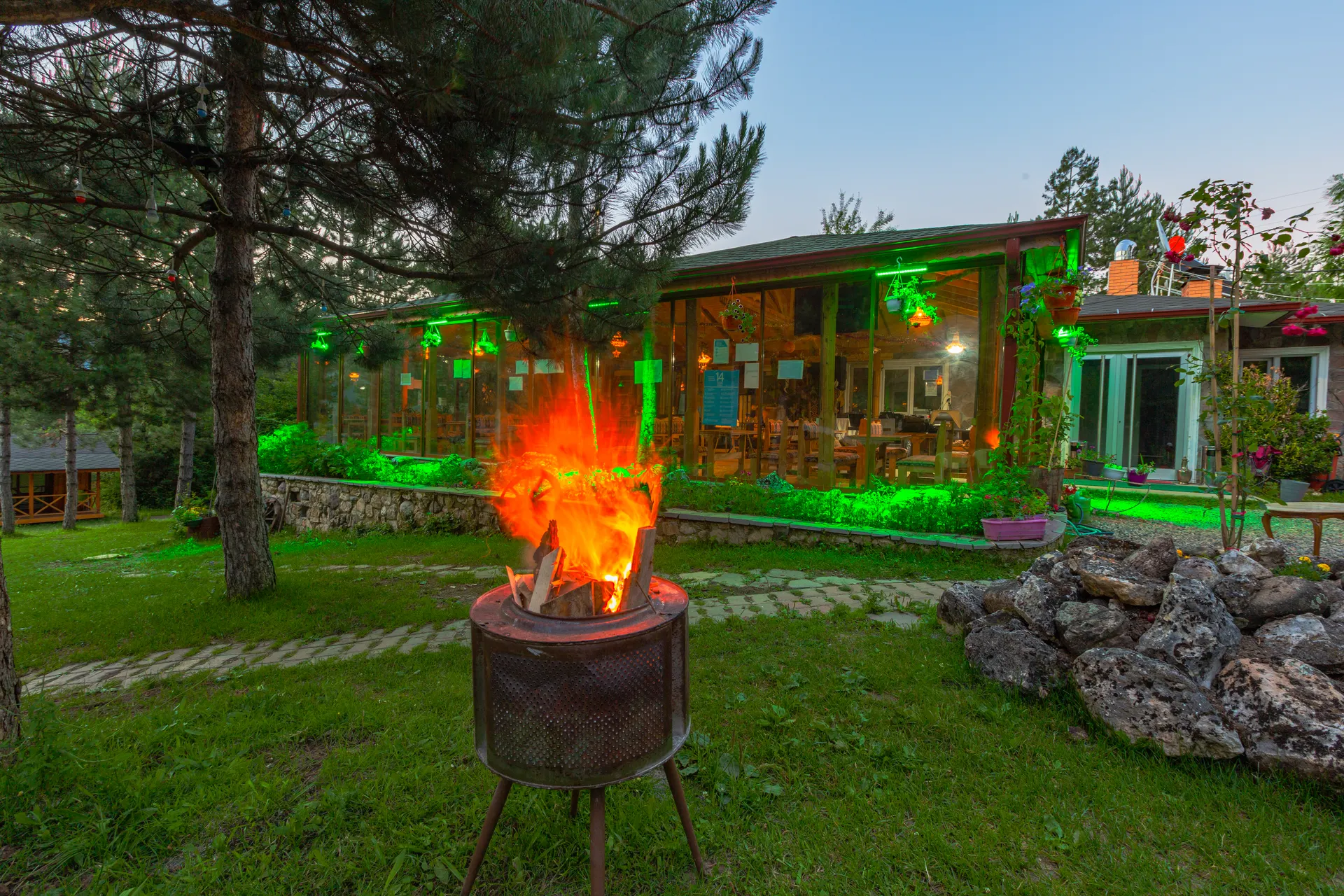
Nesilce Tatil Köyü is in Mengen, Bolu, 48 km from Yedigöller National Park, and sits on the Yeniçağa-Mengen-Yazıcık route used in winter. Details that are useful to photographers:
- Free Wi-Fi: For backing up your photos on the evening after a shoot.
- Free parking: Carrying kit from the car to the room is easy.
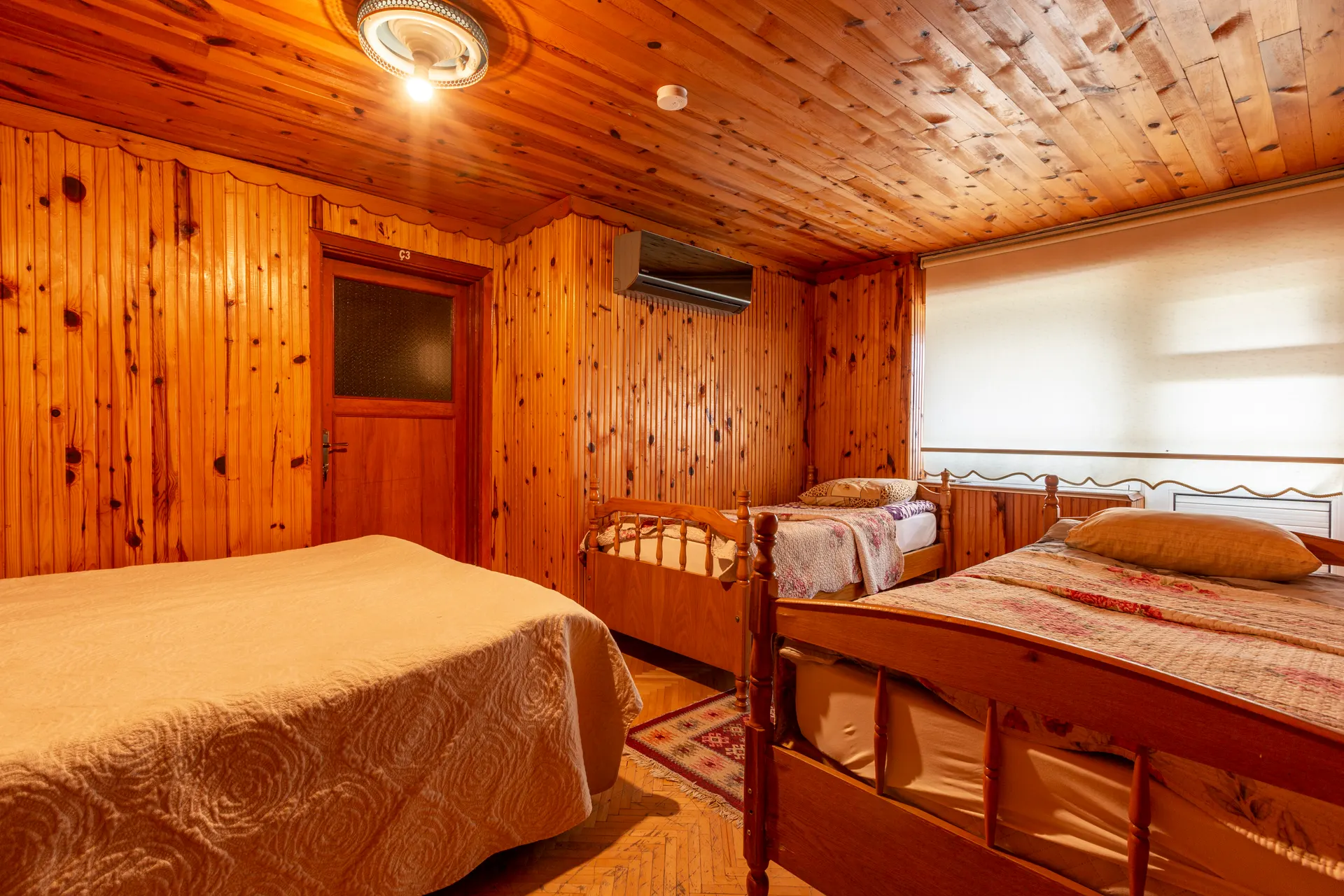
- Room choice: If you are one or two people, a standard bungalow (2-3 guests) or a hotel room (2 guests); if you are a team of 4-6 sharing kit, a duplex bungalow.
- Breakfast: A Turkish village breakfast is included with every stay.
- Photography clubs and workshops: The resort can host groups of more than 60 people using a mix of bungalows and hotel rooms; details are on our groups and events page.
For the route and seasonal planning, see our Yedigöller page. For availability, use the phone and WhatsApp line on our contact page or book through our official listings: Airbnb · Hotels.com.
Sources
- Culture Portal: Yedigöller National Park
- DKMP 9th Regional Directorate: Bolu Yedigöller National Park
- DKMP: 2026 Protected Areas Fee Tariff (Annex 19 shooting fees, Annex 21 implementing rules)
- DKMP 9th Regional Directorate: tender notice for renewing Yedigöller's wooden piers and bridges (2026)
- Sunrise-Sunset.org: sunrise and sunset data
- TRT Haber, 30 July 2026: SHGM's Unmanned Aircraft Systems Instruction published
- TRT Haber, 6 February 2024: mid-term holiday visitor figures
- Habertürk, 15 July 2026: ban on entering forests in Bolu
- Kocaeli Gündem (İHA), 4 December 2025: appointment-based entry announcement
If you want to be in the area the night before a dawn shoot, call +90 507 922 11 18 or send us a WhatsApp message for your dates.
Frequently asked questions
What is the best time of day for photography at Yedigöller?
The window from civil dawn to the first hour or two after sunrise. Because the lakes sit on the valley floor, the sun reaches the water late, which means soft light and mist last longer. In mid-October, sunrise is around 07:00.
Is it allowed to fly a drone at Yedigöller?
Not at will. Under the implementing rules of DKMP's 2026 shooting tariff, drone shoots fall under 'Other Shoots'; you need a permit from the Regional Directorate and must pay a fee. You must also follow SHGM's drone rules. If a shoot without a permit is detected, twice the tariff is charged.
Do I need a permit for wedding or engagement photos at Yedigöller?
Yes. In the 2026 tariff, an outdoor wedding, civil ceremony or engagement photo shoot costs 1,860 TL per day and a video 3,720 TL. The permit is issued by the Regional Directorate; those paying for a shoot are not charged a separate entry fee.
Which lenses and filters should I bring to Yedigöller?
A wide angle for the lakes, a 200 mm or longer telephoto for deer and distant forest layers, a polarising filter to manage reflections, an ND filter for long exposures at the Nazlıgöl waterfall and, without fail, a tripod. Batteries drain quickly in the cold, so carry spares.
What time can I enter the park for a dawn shoot?
We could not find officially published opening hours, and appointment-based entry was also announced for 2026. If you plan to enter before sunrise, confirm the gate time and the appointment situation with the National Parks Bolu Branch Office (0374 215 52 81) the day before.
Where can I photograph deer at Yedigöller?
The deer breeding area inside the park is open to visitors. Shoot in the morning or late-afternoon light with a 200 mm or longer telephoto, keeping your distance. Do not feed the animals and do not fly a drone near them.
Plan your Yedigöller break now
Call us for availability, room types and route suggestions around Yedigöller.
Book online:AirbnbHotels.com