Yedigöller Breakfast Guide: Village Breakfasts and Picnics
There is no guarantee of food in the park, so the safest plan is breakfast where you stay and a flask for the road. A practical guide to village breakfasts, Mengen cheese, early-start timing and the picnic bag.
Because food service at Yedigöller is limited and depends on the operator, the safest plan is to have breakfast where you are staying and enter the park with a flask and a cold picnic bag. Allow at least an hour for the 48 km forest road from Nesilce to the park; in autumn, a late breakfast noticeably cuts the daylight left in the park.
How should you plan breakfast on a Yedigöller trip?
Food service at Yedigöller is limited and depends on the operator, so do not assume you will find a breakfast café inside the park. The safest plan is to have breakfast where you are staying, enter the park with a flask and a cold picnic bag, and time breakfast around your park entry. This guide covers what to expect from a Turkish village breakfast, the protected local breakfast products of Mengen and Bolu, how to square breakfast with an early start, and what to pack for a picnic.
Can you find food inside the park?
You might, but there is no guarantee. With a notice published on 30 January 2026, DKMP (Türkiye's General Directorate of Nature Conservation and National Parks) put the operation of the snack kiosk inside Yedigöller National Park out to tender for a 5+5-year lease; the tender was scheduled for 17 February 2026. The Culture Portal also mentions restaurant service for the bungalows inside the park. Whether these services are open on the day, their hours and their menu may vary with the season and the operator.
In practice:
- Do not plan to have breakfast in the park.
- Bring water, a hot drink and snacks for lunch.
- If the kiosk is open, treat it as a bonus.
What is a village breakfast, and what will be on the table?
The basic framework of a Turkish breakfast is well established. GoTürkiye, the Ministry of Culture and Tourism's promotional portal, puts white cheese, tulum and kaşar cheese at the head of the table, alongside olives, vegetables, honey, jam, kaymak (clotted cream), bread and simit (sesame bread rings), boiled eggs or menemen (eggs scrambled with tomatoes and peppers), and Turkish tea in tulip-shaped glasses.
The phrase "köy kahvaltısı" (village breakfast) adds an emphasis to this framework: products that are as local and home-made as possible. Butter, free-range village eggs, local cheese and home-made jam are typical parts of such a spread. "Serpme kahvaltı" (a spread breakfast), on the other hand, describes the presentation rather than the content: everything arrives at once, on lots of small plates. A table can be both a village breakfast and a spread.
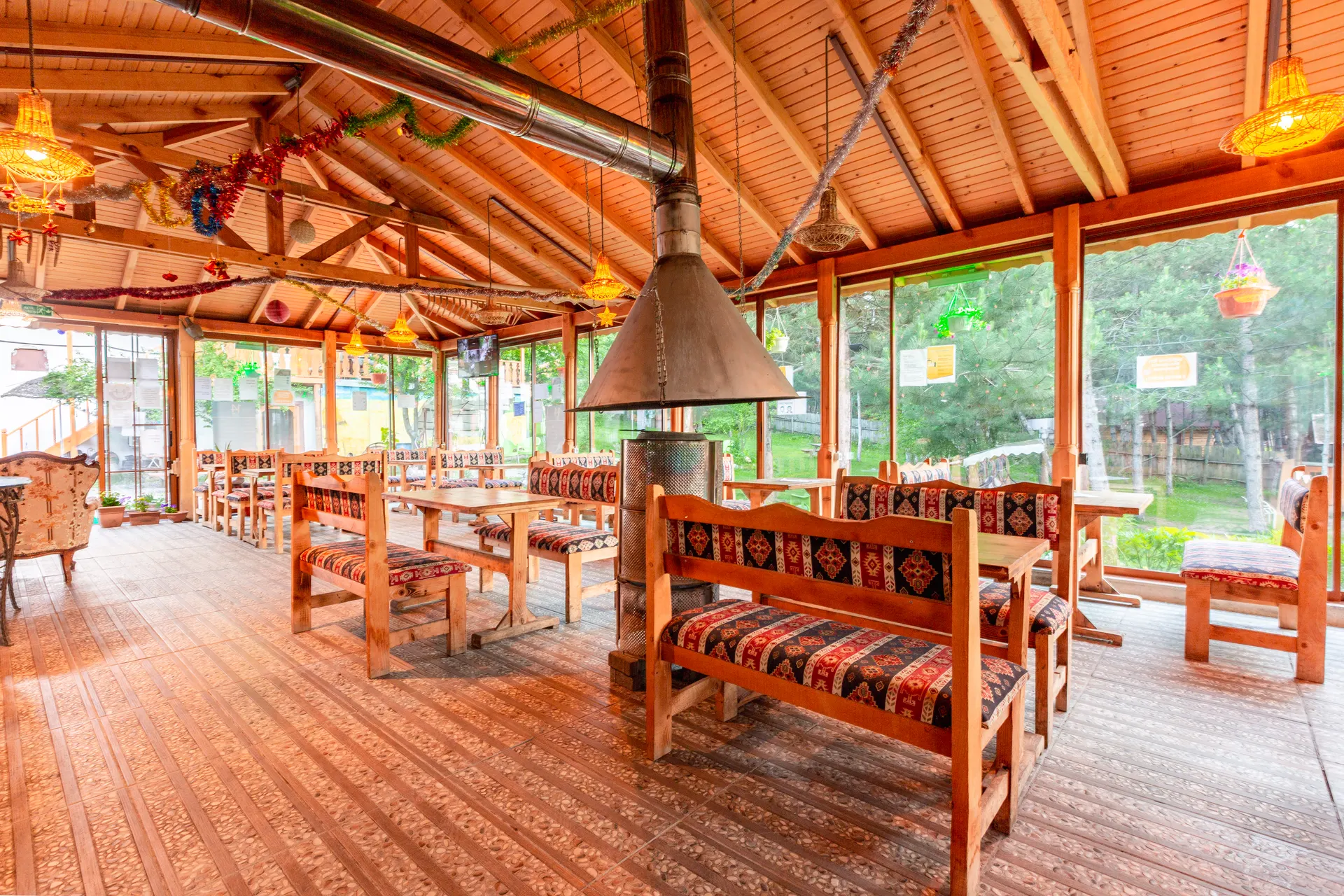
At Nesilce Tatil Köyü, a local Turkish village breakfast is included for every guest. As the spread may change with the season, we do not promise a detailed menu. If you have particular dietary needs, mention them when you book. For how the village breakfast table is put together in the region and a calendar of seasonal produce, see our Mengen cuisine article.
Mengen and Bolu's breakfast products with protected geographical indications
The region's most tangible breakfast-related products are registered as geographical indications by the Turkish Patent and Trademark Office:
| Product | Registration | What it is | How it is eaten |
|---|---|---|---|
| Mengen Cheese (Mengen Peyniri) | No. 1482, 6 October 2023 | A low-fat, semi-hard, pale yellow, cylindrical cheese made from cow's or sheep's milk | Fresh, or fried in a pan or grilled |
| Bolu Keş (Bolu Keşi) | No. 542, 22 September 2020 | A hard, salty, dried curd cheese made from strained yoghurt | As a filling for börek (savoury pastry), or grated and mixed with walnuts over noodles |
| Mengen Höşmerim (Mengen Höşmerimi) | No. 1169, 19 July 2022 | A dessert cooked in a pan with flour, clotted milk cream, milk and butter | Topped with sugar, honey, pekmez (grape molasses) or jam |
Mengen Cheese
According to its registration document, Mengen Cheese looks similar to kaşar, and about 10 litres of milk are needed for 1 kg of cheese. The earliest known records go back to the early 20th century: the Bolu yearbook of 1916 describes its taste as close to kaşar, and the yearbook for 1921-1925 says Mengen's cheese was famous. It is sold vacuum-packed with an average shelf life of two months, which also makes it a good product to take home.
Bolu Keş
The registration document for Bolu Keş defines its geographical area as Bolu's Göynük, Mengen and Mudurnu districts, together with Taraklı in Sakarya and Gölpazarı in Bilecik. Keş is usually made in May and June, dried outdoors in the shade for about 10 days and can be eaten all year round. According to the document, it can be eaten as it is, used as a börek filling, or grated and mixed with walnuts over home-made noodles (erişte).
Mengen Höşmerim
According to its registration document, höşmerim is eaten as a dessert on religious holidays, on special occasions and after meals. It is made with the sweet ingredients of a breakfast table, such as honey and pekmez, but locally it is a dessert rather than a breakfast dish.
How do you square breakfast with an early park entry?
The road from Nesilce to Yedigöller National Park is 48 km and runs along a winding forest road. When planning, allow at least an hour including stops. How your morning goes depends on what matters most to you in the park:
| Type of morning | Breakfast | Departure | Who it suits |
|---|---|---|---|
| Dawn shoot | A flask and a light snack; the main meal as a picnic in the park | About an hour before sunrise | Photographers |
| Early, but with breakfast | Sit down in the first minutes of breakfast and leave within 30-40 minutes | About 45 minutes after breakfast starts | Those who want to get in before the weekend crowds |
| A long village breakfast | Unhurried, enjoying the spread | Late morning | Weekday visitors, families with small children |
For the details of a dawn plan, see our Yedigöller photography route article, and for how crowds differ by day and hour, our weekday or weekend comparison. When you book, ask the resort what time breakfast is served and whether anything can be arranged for an early departure.
How many hours are left in the park after breakfast?
The price of a long breakfast is daylight. The sunset times below come from Sunrise-Sunset.org data for the park's coordinates (Turkish time):
| Date | Sunset | Rough time left in the park if you set off at 09:30 |
|---|---|---|
| 21 June | 20:30 | Daylight is not an issue |
| 1 October | 18:37 | About 7 hours |
| 20 October | 18:07 | About 6.5 hours |
| 10 November | 17:40 | About 6 hours |
| 21 December | 17:29 | About 6 hours; the drive can take longer in snow and ice |
The calculation assumes the drive takes an hour and that you head back an hour before sunset. If you plan a late breakfast in the second half of autumn, decide in advance what you want to see in the park.
Breakfast on arrival and departure days
As check-in is at 14:00 and check-out at 12:00, the number of breakfasts equals the number of nights: for someone arriving on a Friday evening, the Yedigöller breakfast is on Saturday morning. Plan lunch and dinner on the road on your arrival day.
Driving to the park and back after breakfast on your departure day means covering the 48 km road twice. When the Bolu road is open, returning to Istanbul or Ankara via Yedigöller and down to Bolu is an option; according to the Culture Portal, the Bolu road is closed by snow in winter. Check the route on your navigation app before you set off.
How do breakfast and picnics change with the seasons?
- Spring (March-May): Mornings are cool and damp; a sitting mat and a rain jacket come in handy for a picnic. The local speciality of this season is a lunch dish rather than a breakfast one: according to the registration document for Mengen Kaldırık Dolması (stuffed kaldırık leaves), the leaves of the kaldırık plant, also called "hodan" locally, are picked in March and April. Bolu Keş is also made in May and June.
- Summer: The days are at their longest; on 21 June the sun sets at 20:30. Even after a long village breakfast, there is plenty of time left in the park. Do not plan a picnic with a fire during the fire-risk period; switch to a cold picnic.
- Autumn: Both the busiest period and the time when the days shorten fastest. Sunset moves from 18:37 on 1 October to 17:40 on 10 November; about an hour of daylight is lost in six weeks. An early breakfast and a full flask are the two rules of this season.
- Winter: The park is quiet, but the days are short and access is via Mengen; the Bolu road is closed by snow. Rather than a long picnic in a snowy park, a short walk and an early return to your accommodation for a hot meal is more realistic. For the winter route, see our guide to reaching Yedigöller in winter.
What goes in the picnic bag?

The most trouble-free picnic at Yedigöller is a cold picnic that needs no fire.
- Flask: Tea or soup. On autumn and winter mornings, nothing is more useful.
- Sandwiches: A sandwich or wrap made with Mengen Cheese, tomatoes and greens.
- Boiled eggs, walnuts, dried fruit and seasonal fruit: For energy on a long walk.
- Enough water: Do not assume you will find drinking water everywhere in the park.
- A rubbish bag and wet wipes: You are expected to take your rubbish back with you.
- A sitting mat: Grass and benches are wet with dew in the morning.
There are also things you should not bring:
- Barbecues and camping gas stoves: In 2026 the Bolu Governorship banned entry to forested areas from 15 July to 30 September; picnics were only allowed in areas listed by the governorship, between 10:00 and 20:00 and without ground fires, while at Abant only camping gas stoves were permitted (Habertürk). Outside the ban period, too, fires may only be lit in permitted areas.
- Leftover food left in the open: Bears also live in the park (DKMP 9th Regional Directorate). Keep food in closed containers and leave no scraps behind.
The full rules on fires, rubbish and vehicles are in our Yedigöller visitor rules article.
What to know about breakfast at Nesilce
- Breakfast is included with every stay: For the standard bungalow (2-3 guests), the duplex bungalow (4-6 guests) and the standard hotel room (2 guests), there is no separate breakfast charge to think about.
- The spread is a local Turkish village breakfast; its content may vary with the season.
- Times and early departures: Ask about breakfast times and what can be arranged for an early departure when you book.
- Location: The resort is 48 km from Yedigöller and sits on the Yeniçağa-Mengen-Yazıcık route used in winter.
For the Yedigöller route and seasonal planning, see our Yedigöller page. For availability, use the phone and WhatsApp line on our contact page or book through our official listings: Airbnb · Hotels.com.
Sources
- GoTürkiye (Republic of Türkiye Ministry of Culture and Tourism): Traditional Turkish breakfast
- Turkish Patent and Trademark Office, geographical indication registration documents: Mengen Cheese (No. 1482), Bolu Keş (No. 542), Mengen Höşmerim (No. 1169), Mengen Kaldırık Dolması (No. 1167)
- DKMP: Yedigöller National Park (Bolu) operation tender notice, 30 January 2026
- Culture Portal: Yedigöller National Park
- DKMP 9th Regional Directorate: Bolu Yedigöller National Park
- Habertürk, 15 July 2026: ban on entering forests in Bolu
- Sunrise-Sunset.org: sunset data
If you would like to start your Yedigöller morning with breakfast, call +90 507 922 11 18 or send us a WhatsApp message for your dates.
Frequently asked questions
Is there anywhere to have breakfast at Yedigöller?
There is no guarantee. In early 2026, DKMP put the operation of the snack kiosk inside the park out to tender for a 5+5-year lease, and the Culture Portal mentions restaurant service for the bungalows inside the park. As whether these are open on the day may vary with the season, have breakfast where you are staying and bring water and snacks.
What is the difference between a village breakfast and a spread breakfast?
A village breakfast (köy kahvaltısı) emphasises where the products come from: local cheese, butter, free-range village eggs, home-made jam and so on. A spread breakfast (serpme kahvaltı) describes the presentation; everything arrives at once on lots of small plates. A table can be both.
What is Mengen cheese and how is it eaten?
Registered as a geographical indication on 6 October 2023, Mengen Cheese is a low-fat, semi-hard cheese similar to kaşar, made from cow's or sheep's milk. It is eaten fresh, or fried in a pan or grilled. With a vacuum-packed shelf life of about two months, it is also good to take home.
I am going to the park early; will I miss breakfast?
For plans that mean leaving before sunrise, such as a dawn shoot, you may not make it to breakfast time. In that case, set off with a flask and a light snack and have your main meal as a picnic in the park. When you book, ask the resort about breakfast times and what can be arranged for an early departure.
How many breakfasts do you get with a breakfast-included stay?
As check-in is at 14:00 and check-out at 12:00, the number of breakfasts equals the number of nights. Someone arriving on Friday evening and leaving on Sunday has two breakfasts, on Saturday and Sunday morning; lunch and dinner on the arrival day need planning separately.
What breakfast products can I take home from Bolu?
Mengen Cheese, which has a geographical indication, is vacuum-packed and keeps for about two months on average. Bolu Keş is a dried product that can be eaten all year round; store it somewhere cool and dry. A cool bag helps keep the cheese cool on the journey.
Plan your Yedigöller break now
Call us for availability, room types and route suggestions around Yedigöller.
Book online:AirbnbHotels.com