
Mudurnu Travel Guide: Things to Do, Food and Day Trip
Mudurnu, one of Bolu's Cittaslow towns, has a 14th-century mosque and hammam, Ottoman houses and a bazaar where the old Ahi guild traditions live on. It is an easy day out from Mengen.
Mudurnu is a historic district town about 52 km from Bolu city centre and has been a Cittaslow (slow city) member since March 2018. The main sights are the late 14th-century Yıldırım Bayezid Mosque, its still-working hammam dated 1382, the old mansions, the bazaar where Ahi guild traditions survive, and the Clock Tower; do try the three local dishes with protected geographical indication status: basma helva, pumpkin gözleme and kaşık sapı. From Mengen it is roughly 1 hour 45 minutes to 2 hours' drive via Bolu, so a day trip is very manageable.
Where is Mudurnu, and why visit?
Mudurnu is a small district town about 52 km south-west of Bolu city centre, known for its Ottoman-era houses, the 14th-century Yıldırım Bayezid Mosque and hammam, and a bazaar where the old Ahi guild traditions are still alive. In March 2018 it became Türkiye's 15th Cittaslow ("slow city") member. The historic centre can be explored on foot in half a day, so it is easy to drive over from Nesilce Tatil Köyü in Mengen and be back at your bungalow by evening.
This Mudurnu travel guide answers the practical questions: when each building dates from, what to eat in Mudurnu, which nature spots are nearby, how to get there from Mengen and how to plan a single day. We checked dates and distances against official sources, which are listed at the end.
Mudurnu at a glance
| Topic | Details |
|---|---|
| Province | Bolu |
| Distance from Bolu city centre | About 52 km |
| Cittaslow membership | March 2018, Türkiye's 15th slow city |
| UNESCO | Added to the World Heritage Tentative List in 2015 ("Historic Ahi Town of Mudurnu") |
| Registered houses in the urban conservation area | 208 |
| Oldest monuments | Yıldırım Bayezid Mosque and Hammam (late 14th century) |
| Local foods with geographical indication | Basma helva, pumpkin gözleme, kaşık sapı |
| Approximate drive from Nesilce (Mengen) | 110-125 km, about 1 hr 45 min - 2 hrs (via Bolu) |
When did Mudurnu become a Cittaslow town?
According to the Bolu Provincial Directorate of Culture and Tourism's page on Mudurnu, the Cittaslow International Coordination Committee confirmed membership in a letter to Mudurnu Municipality on 5 March 2018, making Mudurnu Türkiye's 15th slow city. The certificate was handed to the mayor later that month, on 17 March 2018, at the committee meeting in Maaseik, Belgium. The application took about a year to prepare, and it had to meet at least 50 per cent of the requirements in each of 72 criteria.
Mudurnu is still on the member list of the Cittaslow Türkiye network.
For visitors, the slow city label means local shopkeepers, local produce and a protected historic fabric rather than chain shops and noisy tourist infrastructure. Mudurnu is a place to wander on foot and linger over tea, not to rush.
The UNESCO Tentative List
Mudurnu was added to UNESCO's World Heritage Tentative List in 2015 as the "Historic Ahi Town of Mudurnu". The Tentative List is a preliminary list of places that may later be nominated; in other words, Mudurnu is not a World Heritage Site, but it is one of the places being worked towards that goal. According to Türkiye's official Kültür Portalı (Culture Portal), the urban conservation area contains 208 registered houses.
What are the main things to do in Mudurnu?
Mudurnu's historic centre is compact and best explored on foot. The main buildings are only a few minutes apart; most of your time will be spent in the streets and the bazaar.
Yıldırım Bayezid Mosque
Mudurnu's landmark is the mosque built by the Ottoman sultan Bayezid I (Yıldırım Bayezid, "the Thunderbolt") while he was still a prince. Kültür Portalı states that the mosque was built in 1382 together with a hammam and a madrasa. The mosque has no inscription of its own; its date is taken from the 1382 (AH 784) inscription on the hammam opposite. The municipality's own visitor page gives 1374 instead. What can be said with confidence is that the building dates from the last quarter of the 14th century.
Its most striking feature is a single dome roughly 19.5 metres across. Spanning a wide interior with no columns, it is cited as an example of the large-dome experiments of early Ottoman architecture. The mosque is in active use for worship, so visit outside prayer times, dress modestly and keep your voice down.
Yıldırım Bayezid Hammam
The hammam directly opposite the mosque is dated AH 784 / AD 1382 by the inscription over its entrance, which names Ömer bin İbrahim as the master builder. It is a double hammam, with separate sections for men and women. According to Kültür Portalı it still works as a bathhouse today, which means you can genuinely bathe in a building more than 640 years old. Opening hours, and the hours when the women's section is open, can vary, so ask on the spot.
Historic mansions and Mudurnu houses
What really defines Mudurnu is not any single monument but the Ottoman-era residential quarter, preserved as a whole. Traditional houses, built mainly of timber, line narrow, sloping streets. Kültür Portalı's walking page on Mudurnu singles out the Armutçular, Keyvanlar, Kazanlar, Yarışkaşı, Hacı Abdullahlar, Fuatbeyler and Hüsnü Çavuşlar mansions (konak).
Many of these houses are privately owned and cannot be visited inside, while some historic mansions offer accommodation or meals. The etiquette is simple: do not walk into a courtyard unless the gate is open, and be respectful of windows and people when taking photos.
The arasta, the bazaar and the Ahi tradition
In the early Ottoman period Mudurnu was one of the major centres of the Ahi brotherhood, the guild organisation of tradesmen and craftsmen. The Bolu Provincial Directorate of Culture and Tourism explains that the town grew as a trading and staging post thanks to its position on the historic Silk Road and other major trade routes. That past is still visible in the bazaar: the historic arasta (a covered row of shops) houses traditional craft workshops, and according to Mudurnu Municipality's visitor page the blacksmiths and coppersmiths still work iron by hand.
The municipality describes two traditions that are particularly interesting:
- The tradesmen's prayer: every Friday the shopkeepers of the bazaar gather for a tradesmen's prayer that is said to have been held for around 600 years.
- The şed ceremony: journeymen who become masters are girded with a şed (sash) in a ceremony.
If you are in the bazaar on a Friday you may come across the prayer; it is not a show but the tradesmen's own tradition, so watch quietly from a distance. The town also holds events for Ahi Week; dates can be followed in the municipality's announcements.
The municipality's page also mentions the City Museum (Kent Müzesi) and the Pertev Naili Boratav Culture House, which present local history and folk culture. It is a good idea to call the municipality for opening hours before you go.
The Clock Tower
The Clock Tower stands on the slope on the eastern side of town and is the easiest way to see Mudurnu from above. According to the municipality's page on historic monuments, it was first built of timber in 1890-1891, damaged by fire in 1900 and rebuilt in 1905 using stone brought from the surrounding area. It is about 12 metres tall. From the top of the slope, the roofs of the old houses and the dome of the mosque fit into a single frame.
Kanuni Sultan Süleyman Mosque, the Camel Bridge and Mudurnu Castle
If you have time, explore the quieter outer ring of the centre:
- Kanuni Sultan Süleyman Mosque: the municipality gives the date as 1546 and attributes it to Suleiman the Magnificent (Kanuni); Kültür Portalı notes that it probably dates from the 16th century but that no inscription or document links it to Suleiman. It is a plain building with a timber ceiling and a brick minaret with a single balcony.
- Camel Bridge (Deve Köprüsü): the construction date of this cut-stone arched bridge in the Musalla neighbourhood is unknown; judging by its workmanship it is thought to date from the 1700s.
- Mudurnu Castle: only ruins remain of the castle, which goes back to the Byzantine period. The Ottoman traveller Evliya Çelebi, who visited in 1650, described an octagonal castle with 20 towers and a single gate.
Summary table of the main sights
Times are estimates and include walking and short breaks.
| What | Why go | Allow (estimate) |
|---|---|---|
| Yıldırım Bayezid Mosque | Late 14th century, single dome about 19.5 m across | 20-30 min |
| Yıldırım Bayezid Hammam | Dated 1382, a double hammam still in use | 10 min from outside, 1-1.5 hrs to bathe |
| Mansion streets | Conservation area with 208 registered houses | 45-60 min |
| Arasta and bazaar | Ahi guild tradition, craft workshops, local produce | 30-45 min |
| Clock Tower | Stone tower from 1905, view over the town | 20-30 min |
| Kanuni Mosque and Camel Bridge | The quieter outer ring of the centre | 30 min |
| City Museum / Pertev Naili Boratav Culture House | Local history and folk culture | 30 min (if open) |
| Lake Abant | About 18 km from the town centre, lakeside walk | 1-2 hrs |
| Sülüklügöl Nature Park | A quiet forest lake with a short trail | A separate half day |
What should you eat in Mudurnu?
Three of Mudurnu's dishes are registered by the Turkish Patent and Trademark Office as geographical indications (designation of origin, "mahreç işareti"), all three applied for by the Mudurnu District Governorship. They are the most reliable answer to the question of what to eat in Mudurnu.
| Dish | What it is | Registration |
|---|---|---|
| Mudurnu Basma Helvası | A flour halva made by adding a syrup of sugar, water and egg to toasted flour, served with walnuts | No. 637, 23.12.2020 |
| Mudurnu Bal Kabaklı Gözlemesi | Gözleme (a thin stuffed flatbread) filled with grated pumpkin fried with onion, cooked between two sheets of dough on a griddle or tray; made in savoury and sweet versions | No. 716, 12.04.2021 |
| Mudurnu Kaşık Sapı | A pasta-like dish made from squares of thin dough whose two corners are joined with the handle of a wooden spoon; served with walnuts, keş (dried curd) and butter or kaymak (clotted cream) | No. 775, 28.05.2021 |
According to the Turkish Patent Office's registration document, what sets basma helva apart is the egg in the syrup, which gives the halva its colour, flavour and texture. The document also notes that in the past it was made mostly with butter and kaymak rather than sunflower oil. Kaşık sapı ("spoon handle") takes its name from the wooden spoon handle used to fold the dough.
A few practical tips:
- Basma helva is a good thing to take home for your evening tea; ask the shopkeepers in the bazaar where it is sold.
- Pumpkin gözleme: remember that pumpkin is an autumn crop, and if you do not see it on the menu, do ask.
- Kaşık sapı may not be on every menu every day; asking local restaurants and mansion restaurants in advance makes things easier.
For many years Mudurnu was also known as the centre of Türkiye's chicken industry, which is why the town's name still makes many Turks think of chicken first. For a wider look at the region's food culture, see our article on Mengen cuisine; Mengen and Mudurnu make for two very different tables on the same trip.
Nature around Mudurnu: Lake Abant, Sülüklügöl and Lake Karamurat
According to the municipality, three nature spots stand out around Mudurnu.
Lake Abant
Lake Abant lies within Mudurnu district, in an oval basin between the Abant and Mudurnu mountain ranges, and according to the municipality it is about 18 km from the town centre. Because it is only a short detour on the drive between Bolu and Mudurnu, it is easy to see both on the same day. For the roughly 7 km lakeside trail and a seasonal plan, see our Lake Abant travel guide.
Sülüklügöl Nature Park
According to the 9th Regional Directorate of Nature Conservation and National Parks, Sülüklügöl lies in the Yürse area of Mudurnu district, about 85 km from Bolu, at an altitude of 1,050 metres, within an area of 810 hectares. It was declared a nature conservation area on 25 March 1988 and became a nature park on 22 November 2011. The same source explains that the lake formed when water filled an area that had subsided through tectonic movement. The park has a trail of about 1.3 km, dirt roads, toilets, picnic tables and a drinking fountain.
The municipality says the lake lies about 9 km off the Mudurnu–Akyazı road, and from Mudurnu town centre it is roughly 50 km by road. That means Sülüklügöl does not fit into a day trip to Mudurnu from Mengen; it needs a separate half day or a night on the Mudurnu side. Check camping and picnic rules with the regional directorate before you go.
Lake Karamurat
According to the municipality, this is a crater lake about 30 km north-west of Mudurnu, on the Mudurnu–Adapazarı road, named after the nearby village of Karamurat.
Are there thermal springs in Mudurnu?
Yes, there are two thermal sites in the district, but check the current situation of both before you go.
- Babas Kaplıcası (Babas thermal spring): according to the municipality it is about 3 km from the town centre, the water is around 40 °C and you can bathe in it without adding cold water. The municipality's page says the new spa building has not yet opened and that the old building offers guesthouse-style rooms; the local press has also reported plans to rebuild it. So ask in advance whether it is open.
- Sarot Thermal Valley: within the boundaries of Taşkesti, on the Taşkesti–Adapazarı road, it is a larger thermal area that, according to the municipality, can serve 4,500 people a day. It lies in a different direction from Mudurnu town, so it is hard to fit into a day trip.
A note: Nesilce Tatil Köyü has no pool, jacuzzi or thermal facilities. If you want a thermal day, you will need to plan it separately on the Mudurnu side.
When is the best time to visit Mudurnu?
Mudurnu can be visited in any season. Because the historic centre is explored on foot and has indoor sights such as the mosque, the hammam and the museums, it also rescues a plan when the weather turns. What to expect by season:
| Season | Highlights | Watch out for |
|---|---|---|
| Spring (April-May) | Greening forests, quiet streets, good walking weather for Abant and Sülüklügöl | Chance of rain; dress in layers |
| Summer (June-August) | Long days, a chance to combine with Abant and Sülüklügöl | Abant gets busy at weekends |
| Autumn (September-November) | Forest colours, pumpkin season | Shorter days; plan an early return |
| Winter (December-March) | Snowy rooftops, indoor sights such as the hammam and museum | Snow and ice on the mountain road; winter tyres are essential |
In autumn you can plan Mudurnu around the same colour calendar as Yedigöller National Park (the "Seven Lakes") and Abant. For which places in the region stay open in winter, see our guide to things to do in Bolu in winter.
How do you get to Mudurnu, and how long is the drive from Mengen?
The most practical way to reach Mudurnu is by car via Bolu. The distance from Bolu city centre to Mudurnu is about 52 km. Since Nesilce Tatil Köyü is about 55 km (around 50 minutes) from Bolu city centre, the total drive is roughly 110-125 km and takes 1 hour 45 minutes to 2 hours, depending on route and traffic.
| Route | Approx. distance | Approx. time |
|---|---|---|
| Nesilce (Mengen) → Bolu city centre | 55 km | 50 min |
| Bolu city centre → Mudurnu | 52 km | 55-60 min |
| Nesilce → Mudurnu (total) | 110-125 km | 1 hr 45 min - 2 hrs |
| Mudurnu → Lake Abant | 18-23 km | 30-40 min |
| Mudurnu → Sülüklügöl | About 50 km | Depends on road conditions |
Times are approximate values from mapping services and vary with weather, roadworks and breaks. The Bolu–Mudurnu road crosses mountainous terrain and can see snow and ice in winter, so it is a good habit to check the list of closed roads published by the General Directorate of Highways (Karayolları Genel Müdürlüğü) before setting off.
If you are travelling by public transport, check services from Bolu bus station to Mudurnu in advance; for a day trip, a car is far more flexible.
A day trip to Mudurnu from Mengen
The plan below is for a day that starts after breakfast at Nesilce and ends back at your bungalow in the evening. The times are examples; shift them to suit the season.
- 08:30 — Leave after breakfast. Enjoy the Turkish village breakfast included in your stay, then set off; it is about 50 minutes to Bolu.
- 10:15-10:30 — Arrive in Mudurnu. Park somewhere suitable in the centre; the rest of the day is on foot.
- 10:30-11:30 — Yıldırım Bayezid Mosque and Hammam. Spend a few minutes under the dome, then look at the door and inscription of the hammam opposite.
- 11:30-12:30 — The arasta and bazaar. Craft workshops, coppersmiths and blacksmiths; if it is a Friday you may come across the tradesmen's prayer.
- 12:30-13:45 — Lunch. Look for kaşık sapı or pumpkin gözleme, and try basma helva for dessert.
- 13:45-15:00 — Mansion streets and the Clock Tower. Walk up through the old houses to the tower and look down over the town.
- 15:00 — Head back. Pick up some basma helva for your evening tea.
- 15:30-16:30 — Optional stop at Lake Abant. A short lakeside walk; in autumn the afternoon light is soft.
- 18:00-18:30 — Back at Nesilce. Round off the evening at your bungalow with tea and Mudurnu helva.
From November to February it gets dark early; shorten or skip the Abant stop and make sure you are off the mountain road before dark.
An evening at the bungalow: seeing Mudurnu from Mengen
You can also stay in one of Mudurnu's historic mansions; if Mudurnu is your only goal, spending a night there makes sense. But if your plans also include Yedigöller, Mengen and the surrounding area, a base on the Mengen side with a day out to Mudurnu makes for a more balanced trip.
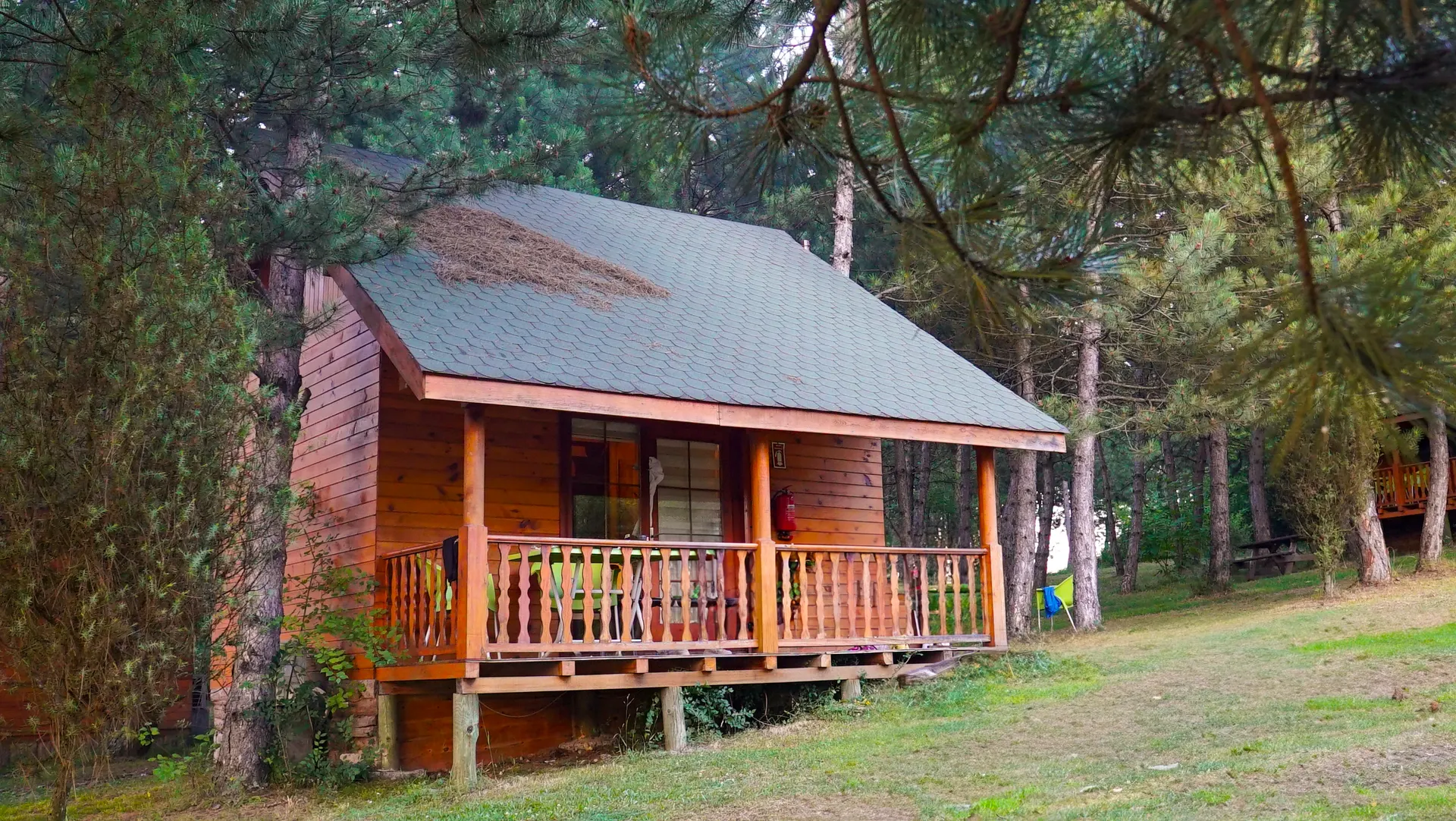
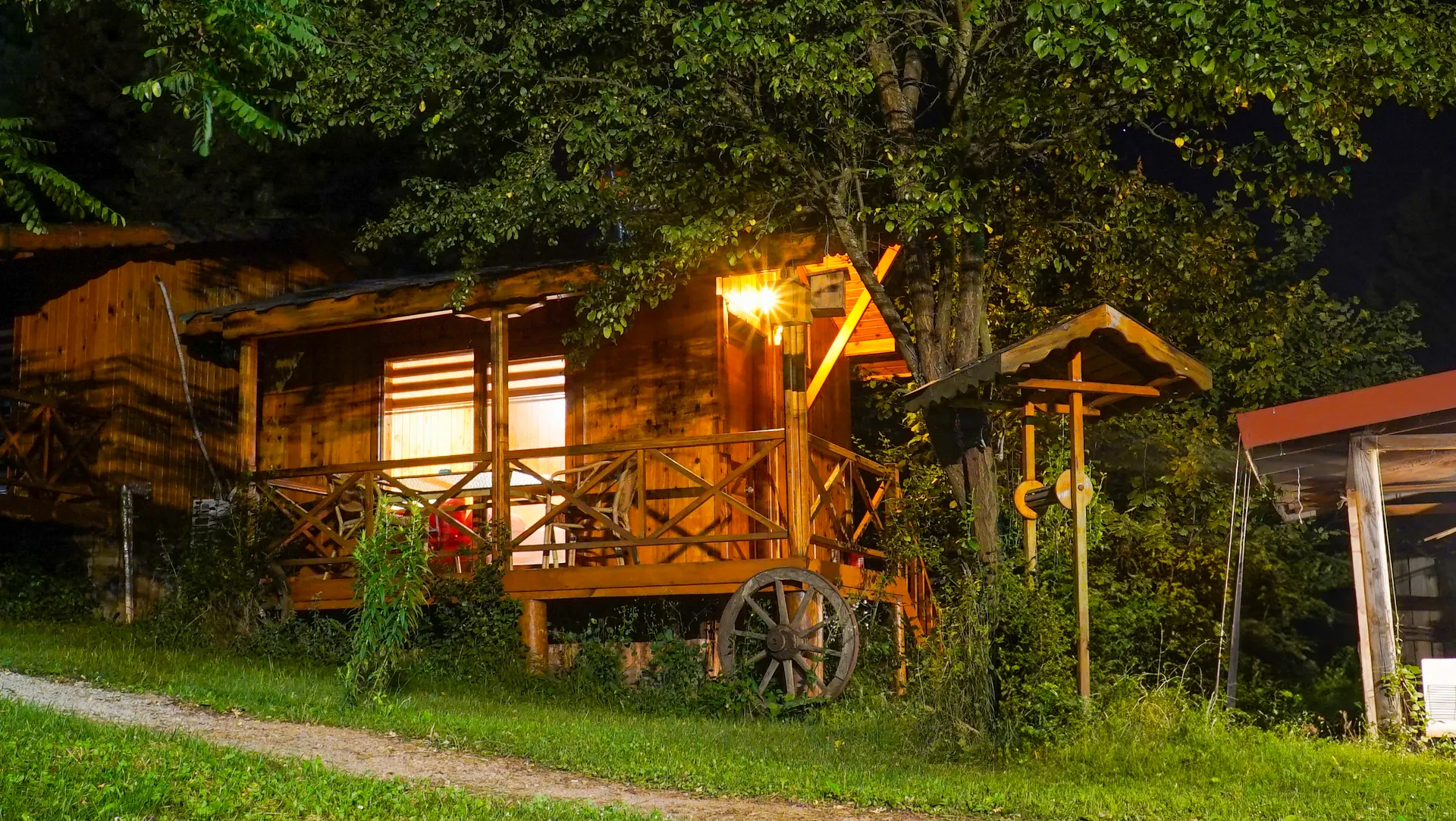
Nesilce Tatil Köyü is in Mengen, Bolu, about 48 km from Yedigöller National Park. It has 25 units: 10 standard bungalows, 8 two-storey bungalows and 7 standard hotel rooms. A traditional Turkish village breakfast is included with every stay; parking and Wi-Fi are free, and pets are welcome with advance notice. The large terrace of the two-storey bungalows is a lovely spot for an evening after a day in Mudurnu.
To plan your stay:
- See the room types on our bungalows in Bolu page.
- For a route that splits the rest of Bolu by direction, see our things to do in Bolu guide.
- For availability, use the phone and WhatsApp button on our contact page, or book through our official listings on Airbnb or Hotels.com.
Sources
- Bolu Provincial Directorate of Culture and Tourism: Mudurnu
- Kültür Portalı (Culture Portal): Mudurnu Yıldırım Bayezid Mosque, Mudurnu Yıldırım Bayezid Hammam, Walking in the slow city of Mudurnu
- Mudurnu Municipality: About Mudurnu, Historic monuments
- Cittaslow Türkiye: member towns
- Seferihisar Municipality: Mudurnu Became Turkey's 15th Cittaslow City
- Turkish Patent and Trademark Office, geographical indication registrations: Mudurnu Basma Helvası (No. 637), Mudurnu Bal Kabaklı Gözlemesi (No. 716), Mudurnu Kaşık Sapı (No. 775)
- 9th Regional Directorate of Nature Conservation and National Parks: Sülüklügöl Nature Park
- General Directorate of Highways: roads closed to traffic
- Hürriyet (DHA), 29.03.2017: Mudurnu, a candidate for the World Heritage List
If you would like to round off your day in Mudurnu with a quiet evening at a bungalow in Mengen, call us on +90 507 922 11 18 for availability, or message us via the WhatsApp button on our contact page.
Frequently asked questions
Where is Mudurnu and how far is it from Bolu?
Mudurnu is a district of Bolu province, about 52 km south-west of Bolu city centre. Lake Abant also lies within Mudurnu district and, according to the municipality, is about 18 km from the town centre.
What are the main things to do in Mudurnu?
The highlights are the Yıldırım Bayezid Mosque, the Yıldırım Bayezid Hammam opposite it (dated 1382), the streets of historic mansions, the arasta and bazaar, the Clock Tower, the Kanuni Sultan Süleyman Mosque and the Camel Bridge (Deve Köprüsü). Nearby nature spots include Lake Abant, Sülüklügöl Nature Park and Lake Karamurat.
When did Mudurnu become a Cittaslow town?
Following a letter from the Cittaslow International Coordination Committee dated 5 March 2018, Mudurnu became Türkiye's 15th Cittaslow town; the membership certificate was presented in Belgium on 17 March 2018. Mudurnu is still on Cittaslow Türkiye's list of member towns.
What should I eat in Mudurnu?
Three dishes with geographical indication status stand out: Mudurnu basma helva, a flour halva served with walnuts; Mudurnu pumpkin gözleme, a stuffed flatbread made in savoury and sweet versions; and Mudurnu kaşık sapı, a pasta-like dough dish served with walnuts, keş (dried curd) and butter.
Can I do a day trip to Mudurnu from Mengen in Bolu?
Yes. The roughly 110-125 km drive via Bolu takes about 1 hour 45 minutes to 2 hours depending on route and traffic. Leave around 08:30, start heading back at 15:00, and even with an optional stop at Lake Abant you will be back in Mengen by about 18:00-18:30.
Are there thermal springs in Mudurnu?
Yes. Babas Kaplıcası, a thermal spring about 3 km from the town centre (water at around 40 °C), and the Sarot Thermal Valley near Taşkesti are both in the district. Babas has changed its level of service over the years, so check that it is open before you go.
Plan your Yedigöller break now
Call us for availability, room types and route suggestions around Yedigöller.
Book online:AirbnbHotels.com